
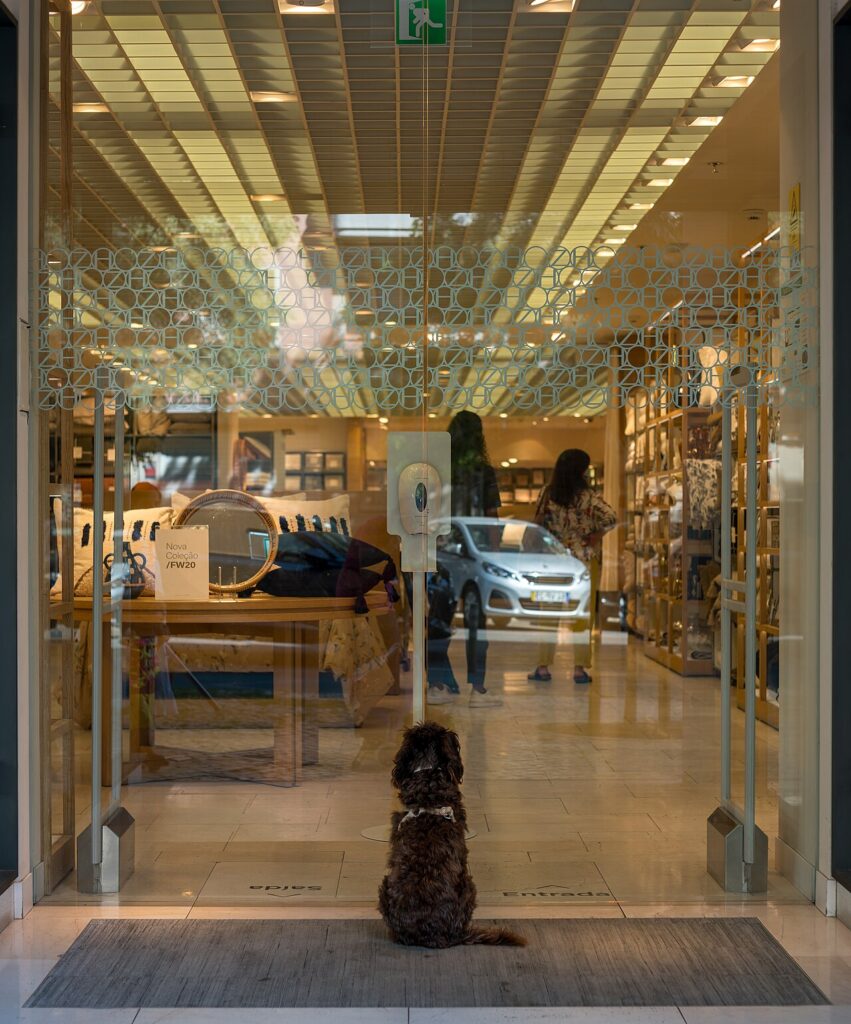
The Quick Answer
Dogs follow their owners everywhere because they are social animals who bond deeply with their family. To your dog, you are the centre of the pack, the source of food, walks, play, and comfort. Following you from room to room, even to the bathroom, is normal behaviour for most dogs.
Following becomes a concern only when it comes with signs of distress, such as panic when you leave, destructive behaviour, barking, or house accidents. A relaxed dog who trots after you is showing loyalty. A tense, clingy dog who cannot settle may need help building independence.
What Is Normal and What Is Not
Normal following is relaxed. Your dog walks behind you, settles near you, and stays calm when you move to another room. They may watch you with interest but can also rest, chew a toy, or nap on their own. Many dogs follow more in the morning and evening, when the household is active.
Watch out for following paired with trembling, panting, pacing, whining, or frantic behaviour when you leave the room or the house. A dog who cannot rest unless they are touching you, or who becomes destructive the moment a door closes, may be dealing with separation anxiety. Sudden clinginess in a normally independent dog can also point to pain, illness, or a change in the home.
Common Reasons Dogs Follow You Everywhere
Pack instinct
Dogs evolved from animals that live and move in groups. Staying close to the group is a survival instinct. In your home, you are the group. Following you is your dog’s natural way of staying with their pack.
Bonding and affection
Dogs form strong bonds with the people who feed, walk, and play with them. Following you is a sign of that bond. Some dogs, sometimes called velcro dogs, are simply more people-focused than others and prefer being near their favourite person.
Routine and rewards
Dogs are quick learners. If following you often leads to good things, like a walk, a meal, a treat, or a game, your dog will keep following. Even small rewards, like a pat or a smile, can reinforce the habit.
Breed tendency
Some breeds were developed to work closely with people, and they tend to shadow their owners more. Herding breeds, companion breeds, and sporting breeds are often the most likely to follow. Independent breeds may still follow, but they are usually more comfortable spending time alone.
Boredom
A dog with little to do will follow you because you are the most interesting thing in the house. Dogs who get few walks, toys, or training sessions often become shadow dogs out of boredom rather than affection.
Anxiety
Dogs who feel anxious may follow to feel safe. Changes such as a move, a new baby, a new pet, loud construction, or a change in your schedule can make a dog clingy. Rescue dogs and dogs who had a rough start in life may also follow more closely while they build confidence.
Age and health changes
Puppies follow because they are young and depend on you completely. Older dogs may become clingy as their vision, hearing, or memory fades. A dog who suddenly becomes much more clingy than usual should be checked by your vet, since pain and illness can make dogs seek comfort.
How to Encourage Healthy Independence
- Build alone-time gradually: Start with very short separations, even just stepping into another room for a few seconds, and calmly return. Slowly increase the time as your dog stays relaxed.
- Reward calm settling: Praise and reward your dog for resting on their own bed, even while you are in the room. This teaches your dog that being apart from you is also a good thing.
- Offer enrichment: Puzzle feeders, chew toys, and sniff games give your dog something to do that does not involve you. A dog with a job is less likely to shadow you all day.
- Exercise every day: Daily walks and play burn off energy and reduce anxious following. A tired dog is more likely to settle on their own.
- Keep arrivals and departures low-key: Avoid big hellos and goodbyes. Calm, brief departures teach your dog that you leaving is a normal, boring event.
- Do not punish clinginess: Scolding a clingy dog adds stress and can make the behaviour worse. Stay patient, and reward the calm, independent moments instead.
When to Worry
Talk to your vet or a certified trainer if your dog panics when left alone, injures themselves trying to escape, barks or howls for a long time after you leave, has house accidents despite being house-trained, or refuses to eat when alone. Separation anxiety is treatable, and a professional can build a plan that fits your dog. If clinginess started suddenly, a vet check can rule out pain or illness first.
Frequently Asked Questions
Why does my dog follow me to the bathroom?
Because you are moving to a new room, and your dog wants to stay with the pack. Bathrooms are also small, quiet spaces, and some dogs find them comforting. It is normal, and it does not mean anything is wrong.
Does my dog following me mean he has separation anxiety?
Not usually. Most dogs follow their owners simply out of habit and affection. Separation anxiety shows up as panic when you actually leave: barking, destruction, pacing, or accidents. A dog who follows you but settles calmly when alone does not have separation anxiety.
How do I stop my dog from following me everywhere?
You do not need to stop it completely, since it is normal. To build independence, reward your dog for settling on their own bed, offer puzzle toys, and practise short, calm separations. Avoid punishing the following, and focus on rewarding calm alone-time instead.
Why is my older dog suddenly clingy?
Older dogs can become clingy when their vision or hearing fades, when they feel pain, or when they become confused. A vet visit is a good idea if an older dog suddenly follows you much more than before, so any health cause can be found and treated.
Do puppies imprint on their owners?
Yes. Puppies go through an early socialization window — roughly the first three to four months of life — when they form strong bonds and learn who their people are, a process often compared to imprinting. A puppy in this stage commonly follows their main person everywhere, including the bathroom. The following usually softens as the puppy matures, and short, calm alone-time practice during this window helps it develop into confident independence rather than clinginess.
Related guides: Why Does My Dog Lick His Paws? | Why Does My Dog Eat Grass? | Can Dogs Eat Apples?
More Dog Behavior, Explained
A dog that trusts you this completely tends to relax in some wonderfully odd ways, too. One of the funniest is the belly-up sploot — here is why dogs sleep on their backs and what it says about how safe they feel.