
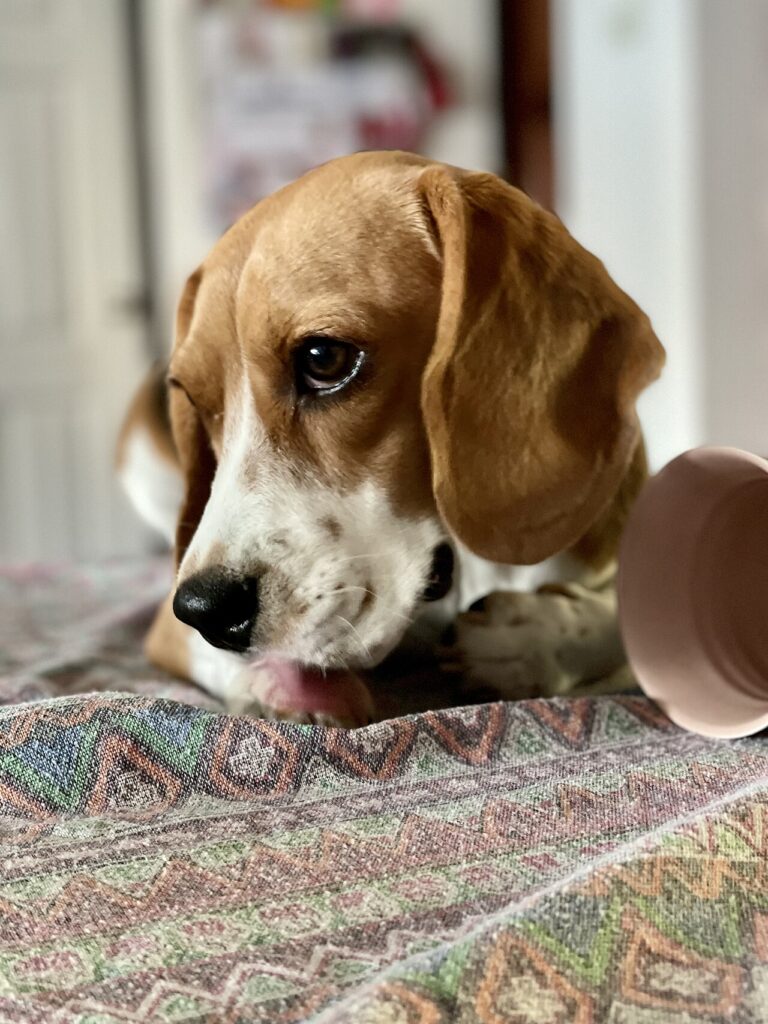
The Quick Answer
Some paw licking is normal. Dogs lick their paws to clean them, to soothe a minor itch, or simply out of habit. It becomes a concern when the licking is constant, focused on one paw, or leaves red skin, hair loss, or sores. The most common causes are allergies, irritants picked up on walks, minor injuries, boredom, and anxiety. A quick paw check at home will often point to the cause, and your vet can help when the licking does not stop.
What Is Normal and What Is Not
Normal paw licking is brief and leaves the skin looking healthy. You might see your dog give the paws a quick clean after a walk, after meals, or while settling down for a nap. The licking is short, covers both front paws fairly evenly, and does not interrupt play or sleep.
Watch out for licking that goes on for many minutes at a time, chewing at the paws, licking one paw much more than the others, limping, red or swollen paws, bald patches, open sores, or a strong smell. Licking that wakes your dog at night is also a warning sign. If you see any of these, look closer and consider a vet visit.
Common Causes of Paw Licking
Allergies
Allergies are the most common reason dogs lick their paws. Environmental allergies, such as pollen, grass, or dust, can make paws itchy, especially in spring and summer. Some dogs also react to ingredients in their food. Allergy-related licking often affects all four paws and comes and goes with the seasons.
Irritants from walks
Road salt, lawn treatments, mud, and hot or rough pavement can irritate the pads. Dogs who start licking right after a walk may be reacting to something they stepped in. In winter, de-icing salt is a frequent culprit. In summer, hot pavement can dry out and crack the pads.
Minor injuries
A thorn, a small cut, a cracked nail, an insect sting, or a burr caught between the toes can all cause focused licking. Dogs lick sore spots to soothe them, so licking aimed at one paw or one toe deserves a close look.
Infection and yeast
Warm, moist skin between the toes is a good place for yeast and bacteria to grow. Infected paws often look red or brownish, feel warm, and have a musty smell. Licking keeps the area damp, which makes the problem worse, so the cycle continues until it is treated.
Parasites (fleas and mites)
Flea allergy is a classic hidden cause: in a sensitized dog, even a single flea bite can trigger intense itching, and the paws are a common target. Mites such as Demodex and Sarcoptes (mange) can also cause paw chewing, usually alongside hair loss, redness, or flaky skin. Keep your dog on year-round flea prevention, and if licking pairs with skin changes, your vet can check for mites with a quick skin scraping.
Boredom and anxiety
Dogs who do not get enough exercise or mental stimulation sometimes develop repetitive licking as a self-soothing habit. Changes at home, such as a new schedule, a move, or more time alone, can also trigger it. If the paws look healthy and the vet finds nothing wrong, boredom or stress is often the cause.
How to Check Your Dog’s Paws at Home
- Pick a calm moment and gently hold one paw at a time.
- Look between the toes for redness, swelling, cuts, or foreign objects.
- Check the pads for cracks, cuts, or stuck debris.
- Check the nails for cracks, breaks, or swelling at the base.
- Smell the paw. A strong or musty smell can point to infection.
- Compare all four paws. One paw looking different from the rest is a clue.
- Note the timing. Licking after walks points to irritants. Seasonal licking points to allergies.
If your dog pulls away, yelps, or will not let you touch a paw, stop and let your vet take a look instead. Painful paws need professional care, not a home exam.
How to Help Your Dog Stop Licking
- Rinse and dry: After walks, rinse the paws with lukewarm water and dry them well. This removes salt, pollen, and lawn chemicals.
- Keep paws clean and dry: Moisture between the toes feeds yeast growth. Dry the paws after rain, baths, and swimming.
- Add exercise and play: A tired dog with chew toys and puzzle feeders has less time for habit licking. Daily walks, training, and play all help.
- Protect the pads: Avoid hot pavement in summer and salted paths in winter. Rinse after any walk on treated ground.
- Do not punish the licking: Scolding adds stress and can make anxiety licking worse. Redirect your dog to a toy or a short training game instead.
- Use only dog-safe products: Do not put human creams, antiseptics, or essential oils on your dog’s paws unless your vet tells you to. Many human products are unsafe if licked.
When to See Your Vet
See your vet promptly if the licking is constant, if you see sores, swelling, hair loss, or discharge, if your dog limps or refuses to walk, or if the paw smells strongly. Also book a visit if the licking started suddenly and does not ease within a day or two. Your vet can check for allergies, infection, injuries, and pain, and can suggest a plan that fits the cause. Do not start medicated creams or antibiotics on your own, since the wrong product can make things worse.
Frequently Asked Questions
Is it normal for dogs to lick their paws?
Yes, brief paw licking is normal grooming. It is only a problem when it is frequent, long-lasting, or damages the skin.
Can allergies make dogs lick their paws?
Yes. Allergies are the most common cause of ongoing paw licking. Seasonal licking that affects all four paws often points to environmental allergies.
How do I get my dog to stop licking his paws?
Start with a paw check and a rinse after walks, add exercise and enrichment, and keep the paws clean and dry. If the licking continues, your vet can look for allergies, infection, or injury.
Does paw licking mean my dog has anxiety?
It can, but anxiety is only one possible cause. Rule out allergies, irritants, injury, and infection first. If the paws are healthy and the vet finds nothing wrong, boredom or stress may be behind the habit.
Why does my dog lick his paws at night?
Night is when distractions disappear, so itching that was easy to ignore all day suddenly has your dog’s full attention. Allergy-driven itch often feels worse at rest, and licking can also become a self-soothing bedtime habit. An occasional nighttime groom is normal, but nightly licking that keeps you (or your dog) awake deserves a vet visit to look for allergies, infection, or pain.
How can I tell a food allergy from an environmental allergy?
Timing is the biggest clue. Environmental allergies (pollens, grasses, dust mites) often flare seasonally and affect the paws, ears, and belly. Food allergies are year-round and non-seasonal, and they frequently pair with recurring ear infections and itching around the face and paws. The only reliable way to confirm a food allergy is a strict 8–12 week elimination diet trial run with your vet — blood and saliva ‘allergy tests’ for food are not considered dependable.
Related guides: Why Does My Dog Eat Grass? | Can Dogs Eat Oatmeal? | Can Dogs Eat Pumpkin?