
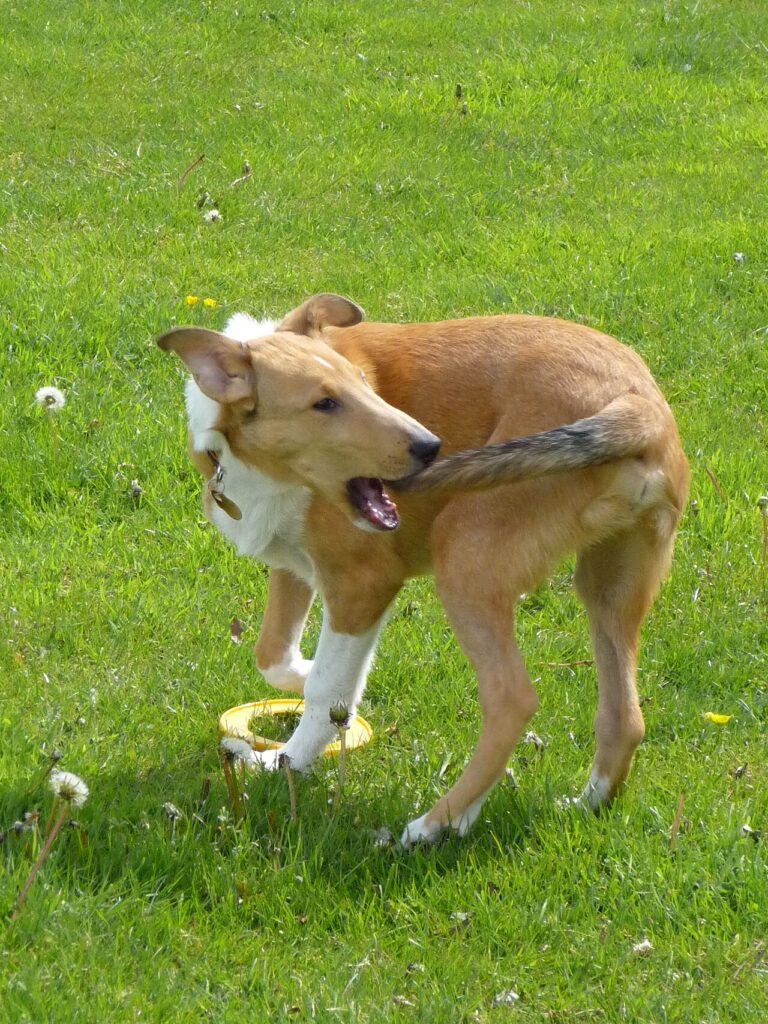
The Quick Answer
Most dogs chase their tails for fun. A dog who spins in circles after his own tail is usually playing, burning off energy, or trying to get your attention. It looks silly because it is silly, and in most cases it is completely harmless.
Tail chasing only becomes a concern when it happens often, lasts a long time, or your dog cannot seem to stop. Frequent tail chasing can point to boredom, anxiety, skin irritation, anal gland problems, or, in rare cases, a compulsive disorder. If your dog chases his tail several times a day or starts suddenly as an adult, pay attention and consider a vet visit.
Why Dogs Chase Their Tails
Play and fun
Puppies and young dogs chase their tails the way toddlers chase their shadows. It is a game. The tail moves, it is fun to catch, and the spinning feels good. Most puppies outgrow intense tail chasing as they mature, the way they outgrow chewing everything in sight.
Attention seeking
Dogs repeat whatever gets a reaction. If you laughed, clapped, or grabbed your phone to record the first tail-chase, your dog learned that spinning in circles gets applause. Tail chasing that happens mostly when you are watching is very likely a performance, not a problem.
Boredom and extra energy
An under-exercised dog invents his own entertainment. Tail chasing is a classic sign of a dog who is not getting enough physical exercise or mental stimulation. Dogs who are crated for long hours or miss their daily walks often develop repetitive behaviours, and tail chasing is one of the most common.
Breed tendency
Some breeds chase their tails more than others. Bull Terriers, German Shepherds, and Terriers are famous tail chasers. In these breeds, a certain amount of spinning is simply part of the breed’s character, especially in young dogs.
Itchy skin or parasites
Sometimes the tail chase has a physical cause. Fleas, flea allergy, and skin irritation around the rear can make a dog spin and nip at his tail or hindquarters. If your dog is biting at his tail rather than just chasing it, look closely for red skin, flaking, or flea dirt.
Anal gland problems
Dogs have two small scent glands near the anus that can become full or infected. A dog with uncomfortable anal glands may scoot on the floor, lick his rear excessively, or spin to try to reach the irritation. If tail chasing comes with scooting or a strong fishy smell, a vet visit is in order.
Pain or injury
A dog who suddenly starts chasing or chewing his tail may be responding to pain. Tail injuries, a sore back, or nerve problems can cause strange spinning or biting behaviour. Sudden-onset tail chasing in an adult dog who never did it before deserves a vet check.
Compulsive behaviour
In rare cases, tail chasing becomes a compulsion, similar to obsessive behaviour in humans. A dog who chases his tail for long stretches, cannot be distracted, and repeats the behaviour many times a day may have developed a compulsive pattern. This is more common in dogs with anxiety or a history of being confined for long periods.
When to Worry About Tail Chasing
See your vet if tail chasing starts suddenly in an adult dog, happens many times a day, comes with biting or hair loss on the tail, or is paired with scooting, a fishy smell, or skin sores. Also talk to your vet if your dog cannot be distracted from the behaviour, seems distressed while doing it, or the behaviour is getting worse over time. Occasional playful spinning in a young dog is not a medical issue.
How to Reduce Tail Chasing
- Exercise more: Increase daily walks, play sessions, and training. A tired dog chases his tail far less. Most dogs need at least 30 to 60 minutes of active exercise a day.
- Add mental stimulation: Puzzle feeders, snuffle mats, chew toys, and training games tire a dog’s brain. Mental work burns energy just like running does.
- Do not reward the spin: Avoid laughing, filming, or making a fuss when your dog chases his tail. Calmly redirect him to a toy or a training command instead.
- Teach an alternative: When your dog starts spinning, ask for a sit, a down, or a trick he knows, then reward that. Give him something better to do with the energy.
- Check for medical causes: If the behaviour is new or intense, rule out fleas, skin irritation, and anal gland problems with your vet before treating it as a habit.
- Reduce anxiety: If tail chasing happens when you leave or during stressful events, work on calm departures and a predictable routine. Separation-related behaviours improve when a dog feels secure.
- Do not punish: Scolding adds stress, and stress makes compulsive behaviours worse. Redirect and reward calm behaviour instead.
Frequently Asked Questions
Is it normal for dogs to chase their tails?
Yes, occasional tail chasing is normal, especially in puppies and young dogs. It is usually play or attention seeking. It only needs attention when it is frequent, intense, or new in an adult dog.
Why does my dog chase his tail and bite it?
Chasing is usually play, but biting at the tail can point to irritation: fleas, skin problems, anal gland discomfort, or an injury. Check the tail and rear for redness, sores, or hair loss, and see your vet if you find any.
Do dogs grow out of tail chasing?
Most do. Puppy tail chasing usually fades as the dog matures and gets more exercise and training. If it continues into adulthood or gets worse, look at exercise, boredom, and possible medical causes.
Should I stop my dog from chasing his tail?
You do not need to stop occasional playful spinning. For frequent chasing, redirect your dog to a toy or command rather than punishing him, and address the underlying cause: exercise, boredom, anxiety, or a medical issue.
Should I ignore my dog while he is chasing his tail?
For attention-driven chasing, yes — with a twist. Laughing, calling, or chasing after your dog all reward the behaviour, so stay neutral instead. Calmly interrupt with a known cue or a toy, then praise and reward your dog when he stops and settles. Over time, rewarding the calm moments teaches him that settling down pays better than spinning. If the chasing looks compulsive rather than attention-seeking, skip this approach and talk to your vet, because compulsive behaviour needs a different plan.
Related guides: Why Does My Dog Lick His Paws? | Why Does My Dog Bark at Night? | Why Does My Dog Follow Me Everywhere?